Rev. Fletcher Harper, Executive Director
Last week, COP31 in Türkiye and the meeting between Trump, Xi and Putin played out on opposite sides of a global split screen.
On one side, COP delegates couldn’t agree to use the phrase “phase out fossil fuels” in their final communiqué. Nor could they agree to increase funding for the energy transition. COP failed.
On the autocrats’ club side of the screen, among their largely empty agreements, the one most likely to stick was their commitment to increase fossil fuel production.
Together, the two sides of the screen add up to a climate disgrace.
The decade following the 2015 Paris Agreement was one of hope. It began with COP21’s commitment to limit warming to 1.5 degrees, saw China become a renewable energy superpower, and witnessed the passage of the US Inflation Reduction Act.
But the blunt-force trauma of Trump, the oil and data center bromance, and energy price shocks fueled by two wars have ushered in an era of climate hushing.
The silence is driven in part by progressives’ own fears. Too many worry that demanding that fossil fuel polluters pay and championing renewable energy development will leave them vulnerable to right-wing attacks that climate action drives up energy prices. They apparently haven’t seen the Green Economic Populist research, which shows how connecting people’s cost-of-living concerns with rising energy prices, the proliferation of data centers and the climate crisis itself can build public support for action.
Instead of a reason to retreat, the cost-of-living crisis is an opening for a new approach to climate, rooted in the ethical nexus between economic and climate justice.
Yet at precisely the moment when this new approach is possible, too many of its potential champions have lost their nerve. It’s as if the decade following Paris was a spasm of climate progress whose gains were more fragile than we wanted to believe.
We’ve been through a dark interval like this before. And there’s a powerful silver lining.
It’s called disgust.
After the 2009 Copenhagen climate talks flopped, the climate movement went into a funk for 18 months. Then the phoenix emerged. Students began pressing their universities to divest from fossil fuel stocks, igniting a global movement. A wave of mass mobilizations followed, including the historic People’s Climate March, which attracted an estimated 400,000 people and helped generate the momentum needed for the Paris Agreement. Then came Greta, the global climate strikes, and much more.
The movement became powerful enough to provoke the furious anti-climate backlash we’re facing today.
My prediction: COP31 and the three autocrats have gone a bridge too far. From the depths of this dark interval, a new possibility is emerging. Consider how far we’ve sunk – and then observe what starts to rise.
Countries once expected to lead on climate are expanding fossil fuel production under the guise of affordability and energy security, impacts be damned.
Canadian Prime Minister Mark Carney, once an international champion of climate action, hasn’t met an oil project he didn’t like since his election. Major fossil fuel producers among developed countries once expected to lead on climate – it’s not just the US – are expanding fossil fuel production. The EU just delayed implementation of its internationally celebrated methane regulations, with TotalEnergies coordinating attacks on the regulations with the Trump administration.
For much of the past decade, governments at least felt compelled to dress up their energy decisions in ethical language. They acknowledged that climate change represented, among other things, a genuine moral concern.
But now, with right-wing nationalism having pilloried climate action, even that ethical framing is disappearing. Raw and immediate power is all that matters, as long as you use the word “affordability.”
Amorality rules.
And disgust will rise.
If ever there was a time when religious voices were needed, in force and at scale, it is now. These climate-destructive policies and the abandonment of meaningful action in the face of mounting human suffering are a disgrace.
Never underestimate the power of disgust – the feeling that erupts when something deep and sacred has been trampled and defiled. It evokes a beautifully powerful response: a jerking awake, as if someone had just cracked open a capsule of ethical smelling salts under your nose.
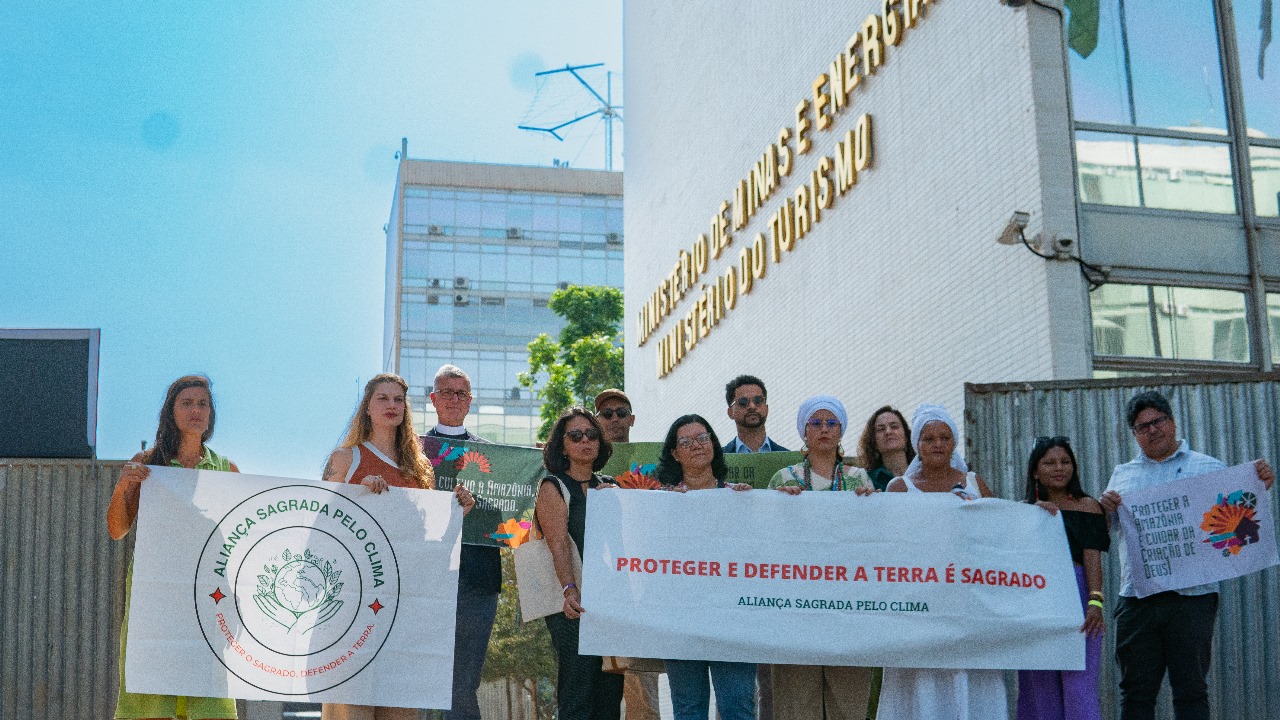
At the end of COP31, more than 50 religious groups came together. They deplored the outcome of the negotiations and committed to come together next April 4–11 for Faiths Rising, a global week of action in support of a fossil fuel phaseout, a well-funded just transition to clean energy, and the growing coalition of 30 countries calling for a fossil fuel treaty.
They didn’t just talk. They committed to act.
Mark my words: the climate comeback began the second the gavel came down on a failed COP31.
With disgust as its ignition fuel.